
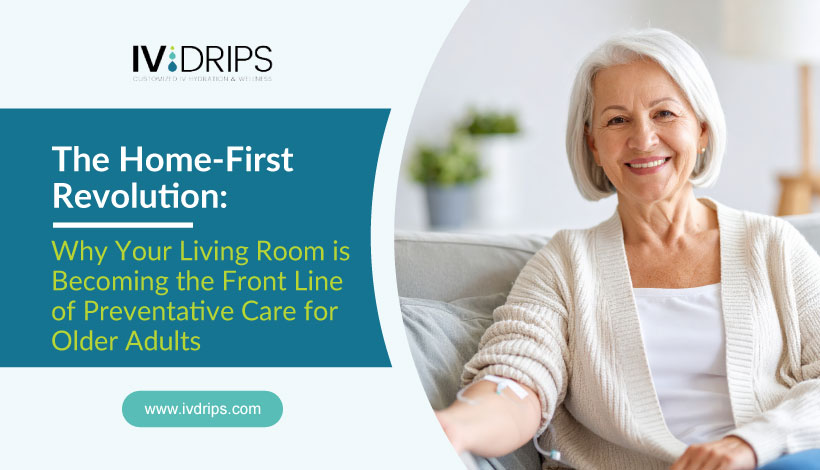
The Home-First Revolution: Why Your Living Room is Becoming the Front Line of Preventative Care for Older Adults
By Bracha Banayan, Board Certified Family Nurse Practitioner and Founder of IVDrips
As a Family Nurse Practitioner in emergency care, I’ve seen preventable crises emerge from small issues. For older adults, even mild deficits can quickly escalate. The home-first model of care helps prevent emergencies by supporting early intervention at home.
At IVDrips, concierge care means bringing clinical tools into the home in a calm, structured way. The goal is not to replace primary care or emergency medicine. The goal is to reduce avoidable escalations and support steadier day-to-day function.
The Mission: Healthcare Without the Hospital
Hospitals are where you go when something serious is happening. Yet many hospital visits begin with something smaller that built up over time, especially dehydration. Older adults are more vulnerable to dehydration because thirst cues can become less reliable, and intake often drops during illness, medication changes, or stressful weeks. When the body is working with fewer reserves, symptoms appear faster, and recovery takes longer.
This is where preventative, home-based support becomes meaningful. By intervening sooner where patients are most comfortable, families can prevent unnecessary ER visits, avoid long waits and challenging transitions, and help older adults stay healthier and more independent at home.
The “Resource Gap” That Builds Quietly With Age
As we age or manage chronic conditions, the margin for error gets smaller. Small changes in intake or routine can create outsized effects. Hydration is one of the most essential resources, and older adults often experience a blunted thirst response that increases the risk of dehydration.
That gap can build quietly. By the time symptoms show up, the body may already be under strain.
What Dehydration Looks Like Before It Becomes an Emergency
Dehydration does not always look dramatic at first. It often shows up as small changes that caregivers recognize right away:
- Lightheadedness when standing
- Fatigue that feels out of proportion
- Confusion or a noticeable change in clarity
- Headache or dry mouth
- Reduced urine output
These signals are not a diagnosis, but they are worth paying attention to. In older adults, early support can make the difference between a manageable setback and an urgent escalation.
Why Dehydration Can Increase Fall Risk
Falls rarely have a single cause. Medications, balance, vision, and blood pressure all play a role. Dehydration is a common contributor because it can reduce circulating volume and increase dizziness, especially when standing up quickly. Research has found an association between dehydration and falls, which supports what families see in real life: when hydration drops, stability often drops with it.
A home-first approach aims to reduce dehydration-related dizziness that can contribute to fall risk. It is one piece of a broader fall-prevention strategy, and it is often an overlooked one.
Preventing Hospitalizations Also Reduces HAI Exposure
When older adults go to the hospital for preventable dehydration-related issues, they face the risk of exposure to hospital-acquired infections. Avoiding hospital trips also spares them from bright lights, constant interruptions, and unfamiliar routines, which can be particularly taxing for seniors. Managing these situations safely at home reduces these risks and supports comfort and peace of mind.
The IVDrips Solution: Concierge Hydration at Home
Intravenous hydration is one of the most effective clinical tools for restoring fluid balance. IVDrips brings this care to the home through licensed medical professionals and structured protocols. For older adults, regular hydration support can provide a “physiological buffer” that helps prevent minor deficits from cascading into major problems.
Home IV hydration can support older adults by:
- Supporting steadier hydration and circulation, which may reduce dehydration-related lightheadedness
- Supporting recovery during periods of low intake, illness, or fatigue
- Supporting independence, allowing care to happen at home, where many seniors are safest and most comfortable
Who This Home-First Approach Is For
Concierge care can be an excellent fit for:
- Older adults who live independently and want proactive support
- Families managing chronic illness with recurring fatigue or low intake
- Caregivers who want earlier intervention and clearer monitoring
- Seniors who feel depleted after travel, illness, or a demanding season
Start a Home-First Care Plan with IVDrips
Preventative care works best when it meets patients where they are. IVDrips offers concierge nursing and in-home IV hydration designed to support older adults and chronically ill patients in a calm, medically guided setting. If you are caring for a parent or managing a condition that makes dehydration more likely, we can help you build a plan that supports stability, comfort, and independence.
Contact IVDrips to learn more about concierge nursing in NYC and how home-based hydration support may fit your family’s needs.
Posted on behalf of