How IV Hydration Therapy Works in New York City
Most people notice dehydration late. The headache that arrives at three in the afternoon. A workout that felt harder than it should have. Two flat days after a flight instead of one.
Oral fluids handle the majority of everyday fluid loss, and there is no reason to reach for anything else in those cases. The complication is that absorption depends on a digestive system that slows down during precisely the illnesses and exertions that drain fluid fastest. An IV skips that bottleneck and delivers electrolyte solution into circulation directly.
Founder Bracha Banayan built this practice out of what she saw working as a Family Nurse Practitioner in an emergency room, where the value of getting ahead of dehydration was obvious long before most patients gave it any thought. She is a board-certified Family Nurse Practitioner, and the team she assembled includes nurse practitioners with backgrounds in family practice, emergency medicine, and acute care. Every infusion is administered by a licensed clinician who reviews your health history first, using sterile technique and hospital-grade supplies whether the setting is a treatment chair or a hotel room in Midtown. Clinical services are provided through NP in Family Health On Demand 24/7 PLLC.
What Is in a Hydration Drip
The base is intravenous fluid with electrolytes, the same category of solution used in clinical settings to restore fluid balance. Tiers build from there.
- Essential: Hydration fluids with electrolytes for fluid and electrolyte replacement.
- Premium: The Essential base with vitamin B complex and magnesium, for patients who also want energy and muscle support.
- Elite: The Premium formulation with zinc, vitamin B12, and glutathione added.
Electrolytes do as much work as the fluid. Sodium, potassium, and chloride determine how water distributes between the bloodstream and the tissues, which is why plain water sometimes falls short after heavy sweating or a long illness. Magnesium takes part in hundreds of enzymatic reactions, muscle contraction among them. The B vitamins act as cofactors in the pathways that turn food into usable cellular energy.
None of these ingredients produces energy on its own. They supply what the systems that do produce it need to run.
When People Book a Hydration Drip
- After physical exertion: Long training sessions, race days, hot-weather workouts with real sweat losses.
- Following air travel: Cabin humidity runs well below normal indoor levels, and long-haul flights compound it.
- During illness recovery: Fever, vomiting, or diarrhea that has made keeping fluids down difficult.
- After heat exposure: Summer days outdoors, particularly for anyone who did not drink steadily.
- Before demanding events: Weddings, performances, filming days, presentations where feeling depleted is not an option.
Mild dehydration responds well to oral fluids and electrolyte drinks. There is no clinical reason to choose an IV when a bottle of water will do the job. Intravenous hydration earns its place when oral intake is not practical, when losses have been substantial, or when time matters.
Severe dehydration is different. Confusion, fainting, a racing heart, no urination for eight hours or more, or an inability to keep any fluids down calls for emergency evaluation rather than a mobile appointment.
“The question I ask before every hydration drip is simple. Can this person drink? If they can, and they feel fine otherwise, I tell them to drink. IV therapy is a tool, and tools work best when you use them for the right job.” — Bracha Banayan, FNP-BC, Founder
What to Expect During Your Appointment
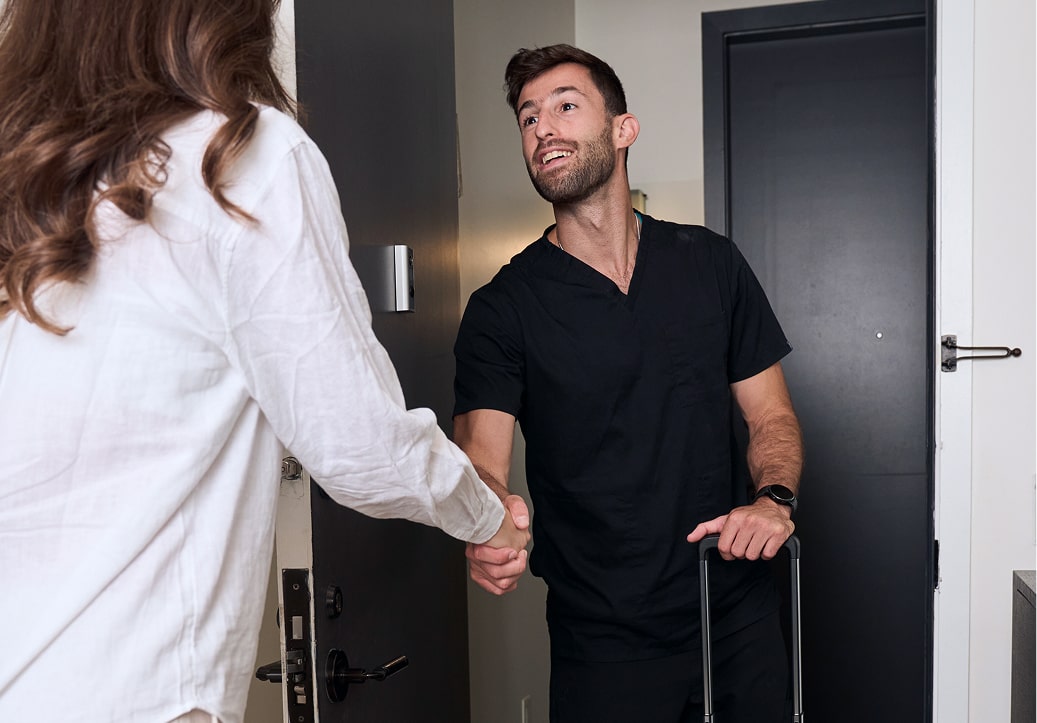
A licensed nurse arrives at your home, office, or hotel with everything needed for the session. The visit opens with a health review covering medications, allergies, relevant medical history, and what brought you to book. That review is not a formality. Certain heart and kidney conditions change whether a fluid load is appropriate, and your clinician needs to know beforehand.
A small catheter goes in, usually in the forearm or the back of the hand. Most people describe a brief pinch at insertion and comfort after that. The fluid runs over roughly 30 to 45 minutes depending on tier and tolerance, and your nurse stays with you, monitoring the site and how you are responding. Work, read, or sleep through it.
Afterward the catheter comes out, the site is dressed, and you get care instructions plus access to a 24/7 support line. Most people go straight back to normal activity.
Why Choose IV Drips for Hydration Therapy
- Board-Certified Clinical Team: Nurse practitioners with credentials verified through the American Nurses Credentialing Center.
- Emergency Medicine Roots: A practice founded by a nurse practitioner who spent years treating dehydration in an emergency department.
- Honest Clinical Guidance: Clinicians who will tell you when oral hydration is the better choice.
- Same-Day Availability: Appointments frequently available same day in major metropolitan service areas.
- Care Wherever You Are: Home, office, hotel, or event space, with hospital-grade equipment brought to you.
Book Hydration IV Therapy in New York City
Rehydration is one of the few wellness treatments where the mechanism is uncomplicated. The value is in having it delivered properly, by someone qualified, when you need it. Book online or call (212) 220-3957 to talk through which formulation fits. For the physiology in more depth, see why IV hydration works faster than oral hydration.